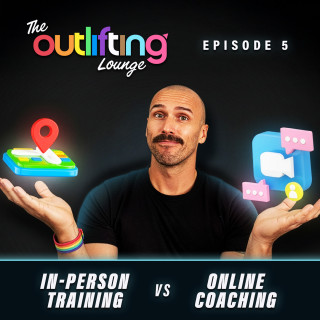
Welcome to The Outlifting Lounge, the show about
Download transcript (.srt)
0:00
0:02
0:06
0:08
0:10
0:12
0:15
0:17
0:19
0:23
0:25
0:26
0:27
0:29
0:32
0:36
0:39
0:41
0:43
0:46
0:48
0:52
0:54
0:56
0:57
0:59
1:00
1:01
1:03
1:05
1:07
1:10
1:13
1:15
1:16
1:18
1:19
1:20
1:21
1:23
1:25
1:27
1:29
1:30
1:32
1:35
1:35
1:37
1:37
1:38
1:40
1:42
1:42
1:44
1:46
1:48
1:50
1:52
1:53
1:54
1:58
1:58
1:59
2:01
2:03
2:04
2:05
2:06
2:07
2:09
2:11
2:11
2:14
2:15
2:16
2:17
2:19
2:21
2:21
2:23
2:23
2:25
2:27
2:29
2:30
2:31
2:31
2:33
2:35
2:36
2:37
2:37
2:38
2:39
2:41
2:43
2:45
2:46
2:50
2:51
2:54
2:55
2:58
3:01
3:02
3:03
3:05
3:07
3:08
3:10
3:11
3:12
3:13
3:14
3:16
3:17
3:22
3:25
3:26
3:27
3:29
3:30
3:32
3:34
3:35
3:36
3:40
3:41
3:43
3:44
3:46
3:47
3:48
3:50
3:51
3:54
3:56
3:58
3:59
3:59
4:02
4:04
4:05
4:08
4:09
4:10
4:11
4:12
4:14
4:17
4:18
4:19
4:21
4:22
4:24
4:25
4:25
4:28
4:29
4:31
4:33
4:36
4:39
4:41
4:42
4:44
4:46
4:48
4:49
4:50
4:51
4:52
4:53
4:54
4:57
4:59
5:01
5:03
5:05
5:07
5:07
5:08
5:10
5:11
5:12
5:13
5:14
5:15
5:19
5:20
5:21
5:23
5:24
5:26
5:28
5:30
5:30
5:34
5:36
5:37
5:41
5:43
5:45
5:47
5:49
5:51
5:54
5:55
5:56
5:57
5:59
6:03
6:06
6:06
6:08
6:11
6:13
6:17
6:19
6:21
6:23
6:25
6:27
6:29
6:31
6:34
6:35
6:37
6:40
6:41
6:44
6:44
6:46
6:48
6:49
6:50
6:51
6:52
6:53
6:54
6:55
6:57
6:59
7:00
7:03
7:04
7:05
7:08
7:10
7:14
7:15
7:17
7:19
7:20
7:21
7:22
7:24
7:25
7:27
7:29
7:30
7:31
7:35
7:37
7:40
7:42
7:42
7:43
7:44
7:45
7:47
7:49
7:50
7:52
7:53
7:56
7:59
8:01
8:02
8:05
8:07
8:08
8:11
8:13
8:14
8:17
8:19
8:22
8:22
8:25
8:27
8:28
8:31
8:32
8:35
8:37
8:39
8:40
8:43
8:45
8:47
8:48
8:50
8:51
8:54
8:56
8:58
9:00
9:02
9:05
9:06
9:08
9:10
9:11
9:14
9:17
9:18
9:21
9:23
9:27
9:30
9:33
9:37
9:39
9:42
9:43
9:46
9:49
9:51
9:53
9:56
9:58
10:00
10:03
10:04
10:06
10:07
10:10
10:13
10:15
10:16
10:20
10:21
10:24
10:26
10:28
10:29
10:32
10:34
10:37
10:39
10:40
10:42
10:45
10:47
10:50
10:51
10:52
10:54
10:55
10:58
11:00
11:03
11:05
11:07
11:10
11:13
11:15
11:18
11:19
11:22
11:24
11:25
11:27
11:28
11:30
11:32
11:34
11:37
11:38
11:40
11:42
11:43
11:46
11:49
11:50
11:53
11:53
11:56
11:59
11:59
12:01
12:02
12:04
12:05
12:06
12:10
12:11
12:12
12:14
12:17
12:19
12:22
12:25
12:27
12:28
12:33
12:35
12:38
12:38
12:40
12:40
12:42
12:45
12:46
12:49
12:50
12:52
12:54
12:55
12:57
12:58
13:00
13:01
13:03
13:05
13:06
13:08
13:09
13:11
13:12
13:14
13:17
13:20
13:20
13:22
13:24
13:24
13:27
13:28
13:29
13:30
13:32
13:33
13:34
13:36
13:38
13:40
13:40
13:43
13:44
13:48
13:50
13:52
13:53
13:56
13:58
14:01
14:03
14:04
14:05
14:08
14:08
14:10
14:11
14:13
14:15
14:18
14:20
14:20
14:22
14:22
14:25
14:27
14:29
14:30
14:33
14:36
14:36
14:37
14:39
14:42
14:43
14:46
14:48
14:52
14:55
14:56
14:58
14:59
15:01
15:03
15:05
15:06
15:07
15:07
15:11
15:11
15:12
15:13
15:14
15:17
15:19
15:23
15:23
15:27
15:29
15:32
15:32
15:34
15:35
15:38
15:39
15:40
15:41
15:45
15:47
15:48
15:50
15:52
15:53
15:57
15:59
16:02
16:05
16:08
16:11
16:12
16:14
16:15
16:17
16:18
16:20
16:22
16:24
16:26
16:27
16:28
16:29
16:32
16:33
16:34
16:36
16:38
16:39
16:40
16:42
16:44
16:46
16:47
16:48
16:50
16:53
16:54
16:56
16:58
16:58
17:01
17:03
17:06
17:07
17:10
17:10
17:13
17:14
17:16
17:17
17:18
17:19
17:21
17:22
17:23
17:26
17:28
17:29
17:31
17:32
17:34
17:35
17:37
17:38
17:40
17:41
17:43
17:45
17:48
17:51
17:53
17:53
17:56
17:58
18:00
18:02
18:05
18:07
18:10
18:13
18:15
18:16
18:18
18:20
18:21
18:23
18:25
18:25
18:26
18:29
18:30
18:33
18:34
18:35
18:35
18:38
18:41
18:41
18:45
18:45
18:48
18:49
18:52
18:55
18:57
18:58
19:00
19:01
19:03
19:07
19:08
19:11
19:14
19:15
19:16
19:18
19:22
19:24
19:27
19:28
19:29
19:32
19:33
19:37
19:38
19:40
19:42
19:44
19:47
19:48
19:52
19:53
19:55
19:57
19:59
20:00
20:03
20:06
20:08
20:09
20:12
20:14
20:16
20:19
20:19
20:22
20:22
20:24
20:26
20:30
20:32
20:33
20:35
20:37
20:40
20:42
20:45
20:47
20:47
20:49
20:52
20:54
20:56
20:58
21:00
21:03
21:05
21:08
21:10
21:12
21:13
21:16
21:16
21:18
21:20
21:20
21:22
21:23
21:25
21:26
21:28
21:30
21:32
21:33
21:35
21:36
21:38
21:39
21:40
21:42
21:43
21:46
21:48
21:49
21:50
21:52
21:54
21:55
21:56
21:58
22:01
22:02
22:03
22:05
22:06
22:07
22:08
22:09
22:10
22:12
22:12
22:13
22:15
22:16
22:17
22:17
22:19
22:20
22:22
22:24
22:26
22:29
22:32
22:34
22:36
22:40
22:43
22:44
22:45
22:47
22:48
22:50
22:52
22:53
22:55
22:57
22:58
23:01
23:01
23:03
23:05
23:07
23:08
23:10
23:11
23:11
23:13
23:14
23:17
23:17
23:19
23:21
23:23
23:24
23:26
23:27
23:29
23:29
23:31
23:32
23:34
23:37
23:37
23:41
23:41
23:44
23:46
23:46
23:48
23:49
23:51
23:54
23:54
23:56
23:59
24:02
24:04
24:06
24:07
24:10
24:11
24:13
24:14
24:17
24:18
24:18
24:20
24:22
24:25
24:26
24:27
24:29
24:32
24:33
24:34
24:36
24:37
24:38
24:39
24:41
24:43
24:44
24:46
24:46
24:48
24:50
24:52
24:55
24:58
24:59
25:01
25:03
25:05
25:07
25:08
25:11
25:12
25:14
25:16
25:17
25:20
25:22
25:25
25:27
25:29
25:31
25:31
25:33
25:34
25:36
25:37
25:39
25:42
25:45
25:46
25:48
25:50
25:52
25:54
25:55
25:56
25:57
26:00
26:03
26:04
26:05
26:07
26:07
26:10
26:12
26:13
26:16
26:18
26:19
26:20
26:22
26:25
26:27
26:29
26:31
26:33
26:35
26:37
26:40
26:40
26:43
26:44
26:44
26:45
26:48
26:48
26:49
26:50
26:52
26:53
26:54
26:56
26:57
26:59
27:00
27:01
27:01
27:04
27:05
27:07
27:09
27:11
27:12
27:13
27:15
27:17
27:19
27:21
27:23
27:24
27:24
27:26
27:28
27:32
27:33
27:35
27:37
27:40
27:40
27:42
27:43
27:45
27:45
27:47
27:49
27:51
27:51
27:55
27:57
27:58
27:59
28:01
28:03
28:05
28:07
28:09
28:12
28:14
28:17
28:18
28:19
28:20
28:21
28:25
28:28
28:29
28:32
28:34
28:34
28:35
28:37
28:40
28:41
28:43
28:46
28:48
28:50
28:50
28:51
28:52
28:54
28:57
28:59
29:00
29:00
29:02
29:05
29:06
29:07
29:12
29:16
29:18
29:19
29:20
29:22
29:22
29:23
29:25
29:27
29:28
29:31
29:37
29:38
29:39
29:41
29:43
29:45
29:47
29:47
29:49
29:51
29:52
29:55
29:57
29:59
30:00
30:03
30:05
30:07
30:09
30:10
30:12
30:14
30:17
30:22
30:23
30:25
30:25
30:27
30:28
30:30
30:32
30:33
30:34
30:35
30:38
30:40
30:41
30:43
30:44
30:46
30:49
30:50
30:53
30:54
30:55
30:57
30:59
31:00
31:02
31:03
31:06
31:07
31:11
31:13
31:13
31:15
31:16
31:17
31:18
31:19
31:22
31:25
31:30
31:32
31:32
pride, fitness and everything in between. I'm Alan.
And I'm Derec. In today's episode, we'll have
a quick catch up on our week. We'll
have a spoiler free chat about the film
that everybody's been talking about, Wicked For Good.
And by the end of this episode, you'll
have a really good idea of which fitness
coaching style fits your goals, lifestyle and budget.
And we'll give you some red flags to
watch out for so you don't waste time
or money.
Oh, and stick around until the end because
we have an exclusive Black Friday offer just
for our listeners.
We're back, episode five, and this is actually
the third attempt at recording this.
So episode eight then?
Everything that could go wrong did go wrong
in the previous two attempts.
Yeah, it was lighting issues, recording issues.
Yeah, it's been a bit of a nightmare,
but hopefully this is the last edit or
the last take.
It needs to be. It needs to be
because I'm going insane.
We do say that it's released on a
Sunday, but this episode might be released at
23:59 tonight.
Oh, well. Anyway, how's your week been?
It's been good. Winter Pride is officially over,
which is nice because we're back into proper
routine again and structure, which I've touched on
before.
For me, routine and structure is like super
important.
So it's been nice just to get back
into things.
How have you been? You've got your voice back!
Aye, Stella's got her groove back.
I have got my voice back, which is
a good thing because it completely went, which
I think you were quite happy about.
No comment.
We actually took it quite easy over Winter
Pride.
It was kind of a working holiday for
us.
We were still working.
We were going out doing some things.
So we weren't really drinking.
You were too ill.
I was way too ill, but I think
shouting over loud music, trying to talk to
people really just made it worse.
And it completely went.
And then I was floored for days afterwards.
Yeah.
At one point you were like Phoebe from
Friends, My Sticky Shoes, and then you just became
ill.
I was like, oh, no, don't come
near me.
None of it was sexy, trust me.
None of it was sexy.
Thanks.
You're welcome.
Am I sexy again?
Yeah, you getting there.
Yeah, it's been nice getting back into routine
again.
And Friday we had a really chilled night because
we went to the pictures to see Wicked
For Good.
Why are you laughing?
The pictures?
Aye, all right, granddad.
The talkies.
We went to see a talkie.
What the hell?
Who calls it the pictures?
Anybody from Glasgow calls it the pictures.
Anybody of a certain age from Glasgow!
It's the pictures.
Cinema.
No, I'm going to talk to the camera
here.
Anybody that's from Glasgow, or the West of
Scotland,
please back me up here that it's the
pictures.
Leave a comment.
Let me know.
And when you leave in the comment, perhaps
say what age you are.
Because I have a theory.
I'm 44.
Alan and I are an age gap relationship.
A year and a half.
That's like dog years in gay years.
It's a year and a half.
I'm 44, Derec's 43.
I will sue.
Anyway, back to the pictures.
What did we go and see?
We went to see Wicked For Good.
We did, with our friend Nik, who was
super excited to see it.
Right, this is going to be spoiler free but
what I will say is I really enjoyed
it.
I thought it was a very good movie.
It was good, but I think I prefer
the first one to the second one.
Yes, I agree with you.
The second film is a bit darker,
and it doesn't really have all the kind
of tunes that you would leave the cinema
singing.
Is the word you're looking for camp?
Yes, it's not as camp.
Yes, that's what it is.
I've been struggling to put my finger on
what it is, yes.
The first one is definitely camper.
The second one, it is a bit darker and
grittier,
and it brings the storylines together to a
conclusion.
And it's good.
It is good in its own right.
I think if you go into the second
one, comparing it to the first and expecting
something very
similar, you might set yourself up for disappointment.
But if you go in without expectations, I
think that's the best way to approach it.
Yeah.
Yeah.
I mean, the production was amazing, costume design
amazing, storyline.
Yeah, it was good.
But I just, I wasn't as engaged with
this one as I was with the first
one.
Yeah.
Still good though.
I think there were quite a lot of
reviews of this that were bad.
I don't really agree.
I don't get it.
I think those are super fans who went
in with high expectations.
They wanted specific things from the film.
Exactly.
Exactly.
However, obviously Jonathan Bailey.
Jonathan Bailey.
Sexy Jonathan Bailey.
Sexiest man alive, Jonathan Bailey.
What was the conversation you had with Nik
before you went in?
So obviously, Nick is, he's going to kill
us.
Nik is a super fan.
And just before we went into the cinema,
I said to him, oh, are you excited
to see
Wicked For Good?
I know you've been looking forward to this
for a while.
And he reached into his pocket and he
took a little pack of tissues.
And he showed me, he said, I brought
some tissues.
I said, are you going to have a
w***?
But then there's a point in the film
where, and this isn't a spoiler, but there is
a point
in the film where you see a little
bit of Jonathan Bailey's chest and his chest
hair.
And that was a highlight.
It was a highlight.
He's looking mighty fine.
So I just leaned over to Nik and
said, hankies at the ready.
What did he say?
He just laughed.
And then I decided I wanted to get
a better laugh out of him.
So I leaned over to him and went,
toss toss.
Then the people in front of us turned
around and went, shhhh!
They weren't happy.
So, yeah, it's a pretty good film.
Jonathan Bailey's quite good in it.
Cynthia Erivo, Ariana Grande, phenomenal.
Like their voices are just something else.
I ended up in a Wicked reel hole
last night, just before bed.
I ended up in the Jonathan Bailey hole.
In my dreams.
You wish.
Yeah.
So I think we've talked about our week.
We've talked about Wicked.
Shall we move on to the fitness section?
Let's do it.
So we have reached the regular fitness section
of the podcast.
And this week we thought it would be
good to do something around fitness coaching.
This is the time of year when people
start to turn their thoughts towards fitness goals,
New Year's resolutions, all those kind of things.
And quite a lot of people reach out
to personal trainers and online fitness coaches
for support in that.
So what we are going to do today
is have a little chat about coaching.
We're going to discuss the differences between
an online fitness coach and an in-person
personal trainer.
So that people know what each does.
They have a better idea of which gets
better results.
And we'll also point out some red flags
as well.
So things to watch out for if you
are shopping around for a coach or a
trainer,
what to look out for that's going to
set the alarm bells ringing.
Yeah.
And I think it's good because people can
then make an informed choice.
You know, they can look at what is
best for them, like you said,
make the decision based on that.
Totally.
And what we probably should preface this with
is a...
Disclaimer.
Yes, because we are online fitness coaches.
We run Outlifting, which is our own service.
But this section is not really to push
our specific service.
It is to just give people a bit
of an overview so that they can make
an informed decision.
And that said, if they do want to
go with our service,
we do have a special offer at the
end so they can stick around for that.
So Alan, do you want to kick us
off and maybe just give a brief outline
of what each is?
Yeah, definitely.
So in person, personal trainer, generally you pay
them by the hour.
They deliver the session within that hour and
they might give you a little bit of
extra
in terms of like a little bit of
nutrition coaching,
but generally it's just for that hour that
you're paying for.
Whereas with an online coach, it's more of
a holistic approach.
I would say, you know, you get your
full workout program,
you get nutrition advice, you get mindset advice,
and you get access to them a lot
more than what you would with an
in-person personal trainer.
Obviously, online fitness coaching is pretty new.
In the last few years, it has exploded
and a lot more people
are moving to that and away from
in-person personal training.
However, it isn't for everybody.
So what we've done is we've prepared a
list here of a few different points
just to demonstrate what the differences are between
the two,
so that people can make that decision.
So the first one up we've got is
cost.
So for an in-person personal trainer, traditionally,
you pay per session,
which is normally an hour.
So you've got your trainer for that hour
in the gym, they're with you,
they go through your workout program with you.
For an online fitness coach, you are paying
a fixed monthly fee
and that kind of covers everything.
It's a fixed cost.
So obviously, depending on how many sessions you
have with an in-person trainer per month,
that can work out more expensive than the
fixed cost online.
So the next one up is location.
Traditionally, an in-person personal trainer will be
gym-based in that one specific gym,
whereas an online coach, they can be accessed
from anywhere.
So that can be particularly good for someone,
for instance, who travels with work
or when you go on holiday, you've still
got access to your coach.
In terms of support, generally, an in-person
personal trainer
gives you support during those sessions in the
gym and it's usually restricted to that,
whereas an online coach is structured.
You get chat, you get calls and they
are more available to you around the clock.
In terms of personalization, online, I think, tends
to be more tailored to you
and a personal trainer, an in-person personal
trainer can be less so.
And the reason for that is because the
personal... the in-person personal trainer
is when they are on the clock, they
are actually physically training you
and that's what you're paying them to do.
Whereas with the online coach, they are, well,
they should be spending the time
making sure that your programming is right, you're
getting the support that you need,
that your nutrition is right and things like
that.
In terms of feedback, with an online coach,
generally, you've got them during a chat
and you would have regular check-ins with
them.
If you need support with your form, so
how you're performing exercises,
generally, how they do that is you would
record a video of yourself in the gym
performing the exercise, you send it to your
online coach and then they give you
feedback about what you need to change in
your setup and your execution.
With an in-person personal trainer, the feedback
is really immediate.
It's while you're in that session, you've got
them, they can give you the feedback then.
And with form as well, that maybe is
an advantage for an in-person personal trainer
because they can tell you then and there,
this is what you need to correct.
Do this differently.
And then the last point that we have
is education.
So an in-person personal trainer, most of
the education that you receive from them
will be workout focused and during your session,
so they can impart wisdom
and teach you things while they are face
-to-face with you, coaching you.
With an online coach, perhaps I should preface
this with saying with a good online coach,
they should have resources available to you and
they can educate you during
check-ins and via chat and also there
should be an element of habit tracking in
there as well
to help you build what you need to
be able to succeed.
So that is a very brief overview of
the main differences between the two.
So shall we get to the crux of
it and what most people will be asking?
Which one's better?
I think actually the real question is, it's
not about which one is better,
but which one is better for you?
You know, everybody's individual in terms of the
support that they need.
So I think with an in-person PT,
if you're someone that needs that extra push
in the moment
and you don't think that you have the
motivation or the drive to do that on
your own,
then an in-person PT is going to
be ideal for you
because they're going to give you that motivation
in the moment.
If you need someone to stand over you
in the gym and push you, perfect.
Yeah, no, I agree.
And I think with online coaching, it's more
of a holistic approach.
You're going to be getting workouts, nutrition, mindset
coaching and accountability.
If you're someone that needs help working on
your physical health in tandem with mindset,
then online coaching is probably a really good
approach for you.
There are people out there who definitely gravitate
more towards an in-person trainer.
There are people who actually, when they start
looking into it,
they realise what they need is an online
coach
because I think an online coach is more
of a, it's a hand-holding and it's
not forever.
It's, I think the good thing about online
coaching
is that really you take it on for
as long as you need it.
So you come on for an initial period.
It's almost like having somebody holding your hand
through that bit.
You can ask them questions whenever you need
it.
And our aim anyway, as online coaches,
is to bring people to the point where
they don't need us anymore.
Yeah, yeah, exactly.
And I think as well, if you're in
the market for an in-person PT or
an online coach,
you need to make sure that they're a
good fit for you as well.
We have had calls before and I've said
to people,
I don't think we're right for you.
I think you need an in-person personal
trainer
because you need that support in the moment,
you know?
So you need to really kind of make
that decision and say,
okay, do I need an in-person PT
that's going to do this
or do I need an online coach which
is going to do this?
Yeah, absolutely. It is about that.
And I would also say there is an
angle
because obviously we are a coaching service for
gay, bi and trans men.
And coming at this from an LGBTQ angle,
I think picking the right trainer is really
crucial as well.
What really underlined that for me as well,
we know of some fitness coaches out there
through social media
who we have actually un-followed because when
you look at who they follow,
or you sometimes you see what they're sharing
in the stories,
there's been times that they've shared really awful
stuff
from the likes of Andrew Tate and the
rest.
And if people are going to them for
support as a member of the LGBT community,
they might not really be aware of this.
They might not be aware of their trainer's
views
and it might only come up a little
later on.
I think that's why it's really important, especially
if you're LGBTQ,
to maybe vet your coach or your trainer
a little closer.
Absolutely. Do some research on them, find out,
really do a deep dive into their social
media
because that's where you're going to get a
feel for who they are.
So I think we've covered online coaching versus
in-person personal training.
We have got one segment left of this
section and that is the red flags.
So we have prepared 10 red flags to
look out for when you're choosing a coach.
Obviously, in every industry,
there's people that are offering good service and
bad service
and the fitness industry is no different.
So I think this section is super important
to highlight the red flags and the green
flags.
And I think we've already given a bonus
one,
which is if they follow Andrew Tate.
Red flag!
Red flag.
So the first one that we have got
on our list,
red flag number one is that the workout
plan that they supply to you
is just a scrap of paper or an
Apple Note
or a Google spreadsheet or something like that.
Really, what you should be expecting in 2025
is an app where you have got your
workouts
and you can track your progress.
We spoke to someone recently and they said
they were getting their workouts through Apple Notes.
Honestly, I don't even know what to say
to that.
It's just crazy.
I mean, it's 2025, almost 2026.
If you're not using an app to track
your workouts,
then I don't know what you're doing.
And leading on from that, red flag number
two,
your workout program isn't customized to you.
In-person PTs and online coaches
potentially could be giving you cookie cutter programs,
which means they're giving everybody the same program
and you should be getting a tailored assessment
for your goals, your ability, and where you
are right now.
Yeah, we've heard that from our clients before
quite a few times
where they've been with a previous coach or
trainer
and they have been forced to use the
treadmill for a set period of time,
even though they've told their trainer multiple times
they do not like running.
Absolutely. I hate running.
See, if someone told me to run, I'd
be like, nah.
As we always say, the best cardio is...
The one that you enjoy doing.
Yes.
So we work with our clients on that
and I think any coach worth their salt
does the same.
Yeah, absolutely.
So red flag number three is that there
is no clear onboarding process.
So when a coach or a trainer brings
on a new client,
they really should onboard them.
And what that essentially means is
they tell them all of the essential information
that they need to know at the start,
they get them up and running,
they get the information from them that is
needed
and it's clear to you so that you
do not feel lost in the process
when you start working with a coach or
a trainer.
Yeah, an onboarding process is so important at
the start.
Think about it, even if you're experienced or if
you're someone new,
starting a new fitness journey can be really
overwhelming.
It can be really scary.
You're going to be nervous.
There's lots of information to take on.
You want to make sure that you're getting
it right.
So having a simple onboarding process really makes
that a lot easier.
It lays out everything that you need to
do in the first couple of weeks.
Absolutely, absolutely.
And I mean, there's no sort of industry
standard for what it looks like,
but I will give our service purely as
an example.
So when a new client signs up with
us,
we trigger a series of timed emails
so that they don't get information overload.
So they're getting one clear actionable step
or one clear piece of information per email
and it's spread out over a series of
days.
So it brings them up to speed gradually.
Most important information first.
We also have, for instance,
a handbook that we have designed ourselves
it's 32 pages long and it's got all of
the basic information that they need
that they can ingest in their own time.
And if they have specific questions for us,
sometimes we can use that as a reference
tool as well
to help guide them through.
So I think that is basically what you're
looking for.
Any sort of trainer or coach should have
a clear onboarding process.
Yeah.
And if you're in the market for an
in-person PT or an online coach,
when you're speaking to them,
ask them what their onboarding process is,
and then you'll get a good idea
of what you're going to get in the
first couple of weeks.
Absolutely. That's a really good tip.
So red flag number four is the personal
trainer
gives you unrealistic expectations for you to work
towards.
And this is both in-person PT and
online coaches.
They might be expecting you to achieve
what their other clients have achieved,
but again, they need to meet you where
you are at the minute.
So if someone's expecting you to lose 10
kg in two weeks,
that's a definite, definite red flag.
Yeah. The trainer or coach should not be
giving you unrealistic expectations.
What they should be doing is setting your
expectations realistically.
So if you come along and you want
to achieve a certain goal,
it is up to the trainer to say,
we can do that within the confines of
whatever restrictions you've told me you have.
This is when this would be realistically achievable
by.
Yeah. And if anyone's telling you that you
can lose 10 kg in two weeks,
just sack them straight away.
Absolutely. Red flag number five is that the
trainer or coach
just tells you to keep adding weights in
order to progress.
Now, the reason that this is a red
flag is because when they program your workout
schedule,
that should include structured phases and progressive overload
built in,
and it should also be open to change
and adapt as you progress.
Yeah. Totally agree with you. We always do
our programs in four week stages
so that you're getting that progressive overload.
It's super important to make sure that that
is programmed within the whole program.
Yeah, definitely.
Red flag number six, and this is specific
to in-person personal trainers,
they frequently cancel sessions.
So if you are looking for an
in-person PT,
ask them how many sessions they've cancelled in
the last month,
and that'll give you a good idea of
how committed they are to their clients.
Absolutely. Life happens, things get in the way.
We're not saying that the cancellation rate should
be absolutely zero,
because that's not realistic.
But what we are saying is if you
are paying for a professional service,
you should expect that professional service.
And somebody who frequently cancels is not going
to deliver that.
Yeah, I agree.
So the last four red flags that we've
got are specific to online fitness coaches.
And red flag number seven is that they
get you to do your check-in
by filling in a form, and then they
send you written feedback.
Now, the reason that this is a red
flag is because as we've said already,
it is 2025, it's almost 2026,
and there is no excuse to not be
having that face time with your client on
a video call.
In my personal opinion, it's just lazy not
to.
Yeah, I agree.
Like you don't get a feel for someone
over a form.
And we've said this in a previous episode
as well.
Like we've always done face-to-face
check-ins
because you get to see that person and
actually see how they're doing.
Filling in a form just doesn't cut it
in 2025.
Yeah, and I think one of the really
important differences
between an in-person personal trainer and an
online coach
is that an in-person personal trainer is
really good for spotting you in the gym
when you're lifting weights.
But an online fitness coach is really good
at spotting excuses.
And really, the only way you're going to
do that
is by talking face-to-face over a
video chat with the client.
You can't do that.
If they fill in a form, they're not
going to be totally honest with you.
They're going to give a glossy overview of
the way things are.
They'll rewrite it.
And that's just the nature of people.
They're going to tell you what you want
to hear.
Exactly, exactly.
Well, I'm hitting on my goals.
I'm hitting on my nutrition.
I'm doing 12,000 steps a day.
Yeah.
Okay, but you're not reaching your goal.
So what's going on?
Exactly, exactly.
We need to be there to call them
out.
And the only way you can really do
that is by talking to them.
It's the only way it works.
I am going to say something controversial here.
And I think the reason that so many
online fitness coaches
do their check-ins by form is because
of these mentorship programs.
So there are these mentorship programs that exist
that advertise to online coaches and they promise,
oh, we will triple your monthly revenue.
You'll bring this in.
And when you join these programs, the advice
that they normally give is
don't do video check-ins.
It takes up too much of your time.
You should be doing form check-ins so
that you can bring in more clients
and make more money.
And none of the focus is on the
service that they are delivering.
It's not about delivering the best service that
they can for people.
And that, for me, is just the wrong
way to go about it.
It almost feels a little bit like then
people are going to get ripped off
because they're getting an inferior service from their
coach.
Yeah, I agree.
And actually, it kind of reminds me of
when I was an in-person PT
because that was all about how many sessions
you could do.
And it wasn't about the result that you
were getting for the client.
And again, that was about making sure that
you did as much as you could
in the time that you had available, you
know.
Whereas, actually, you should be caring about your
clients
and what results they're getting.
Yeah, that would, I mean,
that particular experience that you were talking about,
you were employed by a major gym chain
in the UK.
And that pressure to deliver as many sessions
as possible
was being set by your employer.
Yeah, and I actually hit burnout at one
point
because I was trying to do as much
as I could
and then the clients weren't getting the service
that they should have been getting from me.
You hated that.
Like, I remember you coming home from work
and you just did not enjoy the job.
And that was your first personal training job
after you qualified.
And it sucked the wind out of your
sails.
You decided to become a personal trainer
because it was your passion.
You left a corporate job to go and
follow this
and it almost felt that you,
the first job you landed as a personal
trainer
felt even more corporate.
Yeah, absolutely, yeah.
Like, I became a personal trainer to change
people's lives.
I know that sounds really, really cheesy,
but I actually did.
And going into that environment just was not
a nice environment.
And aside from that as well,
it was like, it felt like a bit
of a boys club.
And if you weren't in the boys club,
then you were an outsider.
And again, being LGBTQ,
that was just another level of that as
well.
So the pandemic hit, I set up online
coaching
and then the rest is history.
A red flag number eight is that they
don't do weekly check-ins.
And again, we've spoke about this before.
If your coach is doing anything other than
weekly check-ins,
then that is definitely a red flag.
I've heard of people doing monthly check-ins
and there's absolutely no way that you can
coach someone to their goals
by doing monthly check-ins.
Absolutely not at all.
We've heard a broad spectrum.
So some online fitness coaches do a
check-in with their client every two weeks.
Some of them do it every month.
And really it has to be every week
because that is just how people live.
It's on a week-to-week basis.
And people have that routine,
people have that structure in their lives.
And you are not going to pick up
things.
As a coach, you're not going to pick
up things quick enough
if you're not doing weekly check-ins.
Yeah, absolutely.
So red flag number nine is all about
communication policies for online coaches.
So what is the typical response time to
questions?
So the way the model works is that
you would have your regular check-in,
hopefully by video.
And hopefully weekly.
And hopefully weekly.
But you should also have access to your
coach
throughout the week as well by chat.
So for us, we have got an app.
And in that app, that's where you get
your workouts, everything like that.
But we also have a chat function in
that app.
And it's dedicated for our clients
so that we can talk back and forward
with them.
So I think, and what we do, this
is kind of reasonable to expect.
And this would be like the gold standard
across the industry.
So for me, this is an example of
what good online coaches do.
So they should say to you, if you
ask, what is your communication policy?
How quickly you will respond?
The answer really should be, I'll get back
to you as soon as possible.
If that's straight away, great.
But it will be no more than 24
hours
from you sending me a message during business
times.
Yeah.
So that's reasonable.
For us, it never really stretches that 24
hours.
It's just a service standard that we put
in place.
But what we strive for is as quickly
as possible.
Yeah, absolutely.
I think probably clients, three hours is maybe
the maximum
that they wait for us to respond to
them.
And even we had a client there at
the weekend
that rolled over their ankle.
So they needed their workout changed.
They couldn't do any lower.
And they needed their upper workout changed
so that they were using machines.
So they're not putting any pressure on their
ankle.
They let me know within a couple hours
that I'd changed the workout for them.
And again, that should be standard for you.
If you need something adapted quickly,
then you should be able to have that
done.
Absolutely.
That's what you're paying your monthly fee for.
And the last one, red flag number 10,
is they are using AI to generate responses,
to generate workouts.
And we've touched on this a couple of
weeks ago.
And it's just, again, you're paying a monthly
fee.
There's no way that they should be using
AI
to send your responses or design your workout
programs
or whatever it might be.
You're paying for a personal service.
Yes, it is online, but it is still
a personal service.
So if you feel that your coach is
using AI in any way,
call them out.
Well, I wouldn't say in any way.
So I'm going to give an example.
So obviously at the top of this show,
we talked about how we had,
this is our third attempt at recording this.
So I'm actually going to give an example
of when AI has been useful and appropriate
to use in what we do.
So the second recording was filmed the whole
way,
but then one of the cameras failed halfway
through.
So it didn't work.
And we needed to rerecord fully.
So what I did was I took the
transcript
recorded from the good camera that didn't fail,
fed that into AI and got a text
transcript
of what we said.
So it basically transcribed everything.
I then fed that into AI and said,
this is the raw recording,
get rid of all of the outtakes,
and then summarize what was left
so that we had an overview
of what we actually had said in
that
so we could remind ourselves
of what we talked about
so that we didn't miss anything
when we rerecorded this.
So that is a useful and appropriate use
for AI.
However...
Yeah, but that's backend stuff,
like clients don't get to know any of
that, you know?
Totally.
But if a coach is using AI
to generate the feedback that they're sending you,
to generate the programs
that they are meant to be writing for
you,
that is the core part of what a
coach
or a trainer is meant to do.
That is their job.
They should not be outsourcing that
to what is essentially
just a really fancy auto-complete function
on your computer.
So by now you should have a good
idea
of the differences between an online coach
and an in-person PT,
how they differ in their approaches,
and also the red flags to look out
for
if you're shopping around.
And remember, a great coach is someone
who will tailor your plan
to fit your goals and lifestyle,
communicate with you openly,
educate you,
help keep you accountable,
and support you without overstepping.
We definitely think we tick all those boxes
and if you're thinking of joining Outlifting,
we've got a special offer for you.
This Friday, the 28th of November,
we will be launching our exclusive
Black Friday discount.
Now, for listeners and viewers of this show,
we are launching exclusive early access from now.
So here's the deal.
We're going to be giving a 30%
discount
off our regular coaching price
and that will be locked in
for as long as you stay with us.
So if you stay for the initial
three-month coaching period,
you will get the discount
and then for any time
that you choose to stay after that,
you will lock in that discount
for the lifetime of your membership
with Outlifting.
Now, because we maintain
a really high level of service,
we restrict the number of clients
that we have at any one time.
So there are limited spaces for this.
So please don't wait.
If you think you might be interested,
you can book in for a no-obligation,
free video consultation
with one of us
to discuss your needs and goals
and see if our service
is the right fit for you.
So to do that,
visit outlift.ing/blackfriday now.
I will put that link in the description
and the show notes
so that you've got it.
But please don't wait about.
Book in.
It's no obligation.
Do it now.
Thank you so much for tuning in to The Outlifting Lounge.
Remember, there are new episodes every Sunday
and you can find us on YouTube, Apple Podcasts, Spotify, and Amazon Music.
And remember, hit the subscribe button now
But for now, over and Outlifting.
But for now, over and Outlifting.